The making of a pair
Look closely at three parts of a SATB shoe. Working photographs show how the last, the leather and the stitching shape the finished pair.
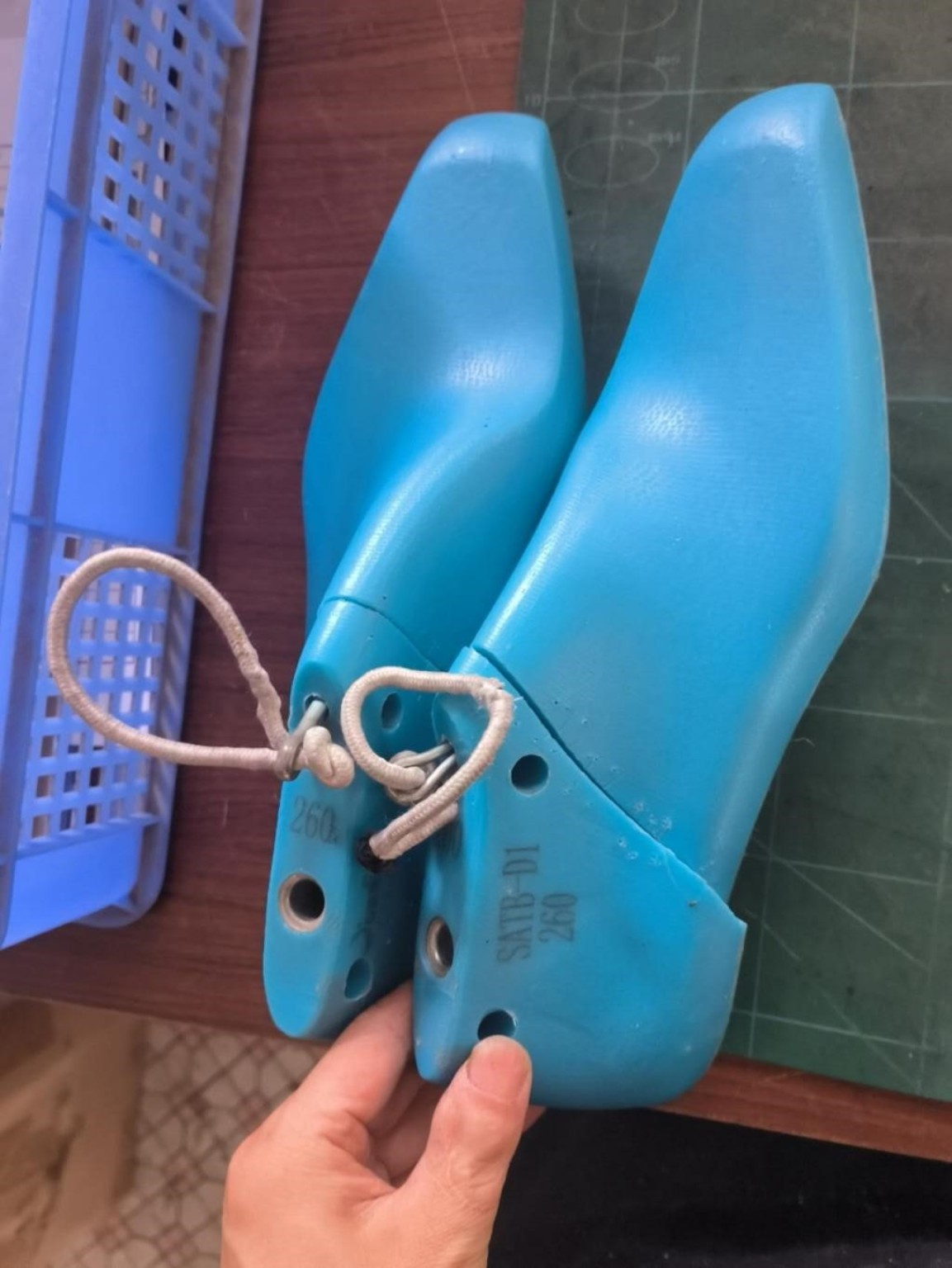
The last
Seen from above, a round toe keeps its curve while a squared toe ends on a shorter, flatter line. The leather follows the shape of the last beneath it.
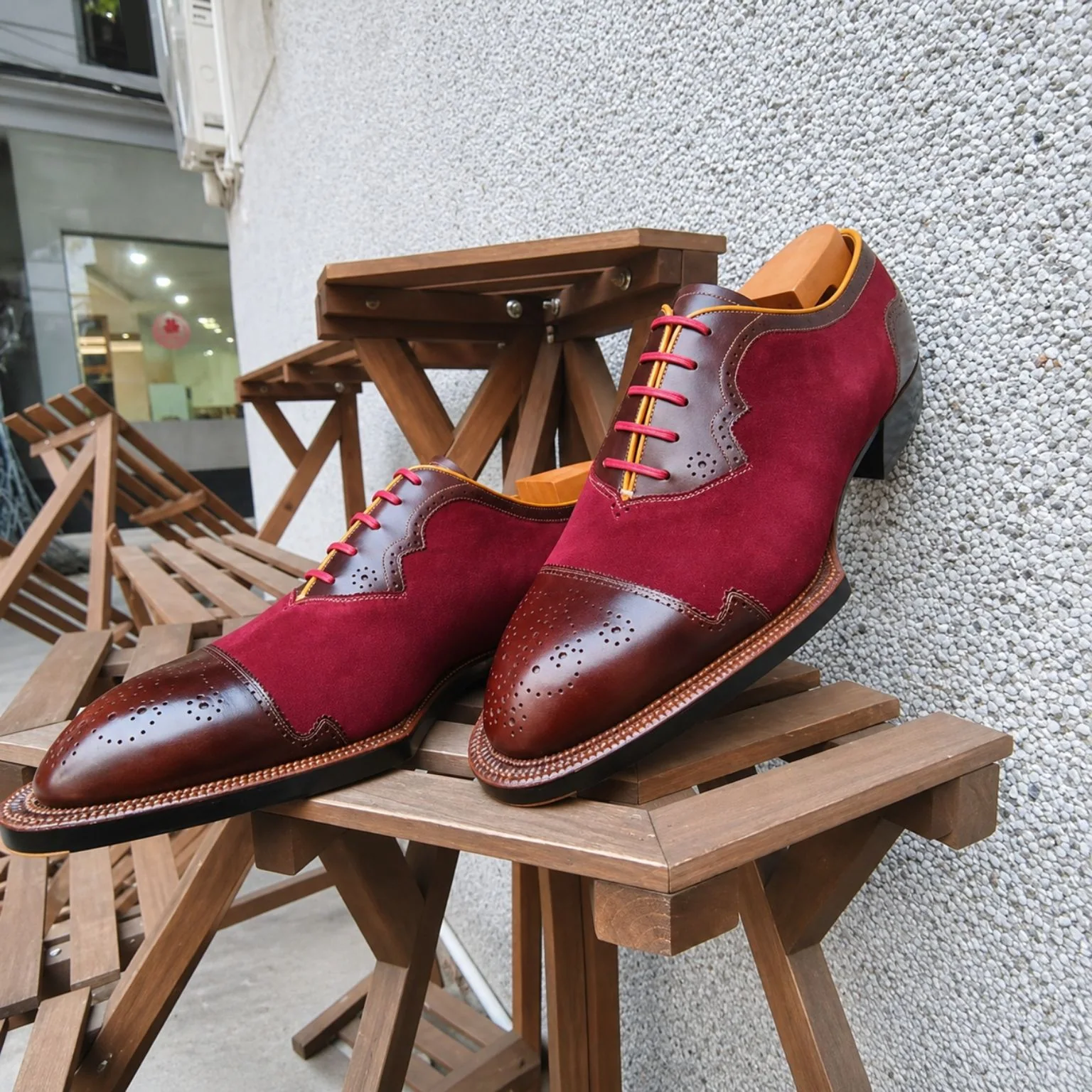
Leather & colour
On the burgundy Oxford, the suede scatters light while the smooth brown toe reflects it. The narrow row of perforations follows the edge where the two surfaces meet.
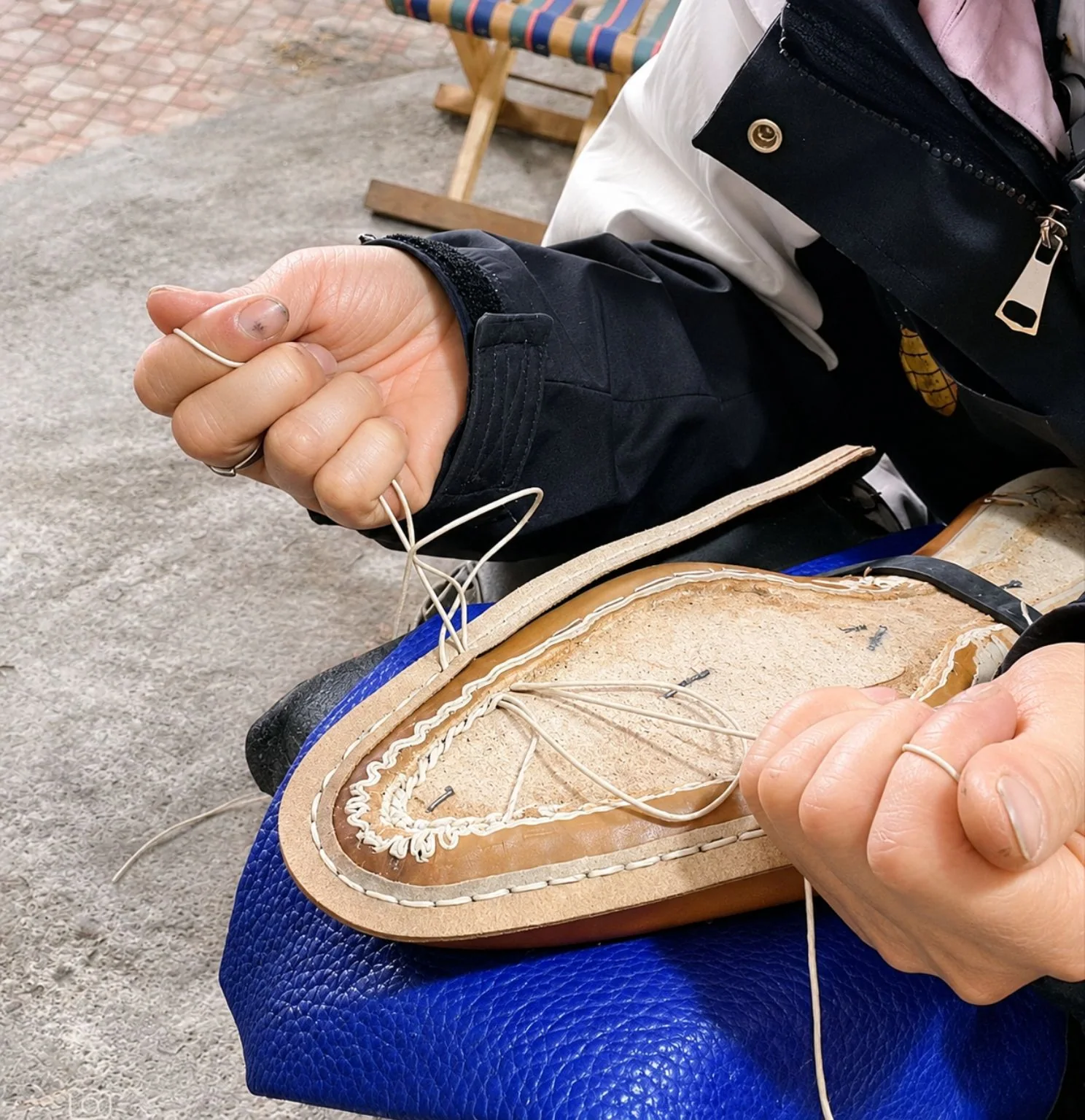
Stitching and the welt
With the boot sole facing upwards, the maker draws the white thread tight along the leather rim. The close view shows the line the stitches follow around the toe.
Six stages at the workbench
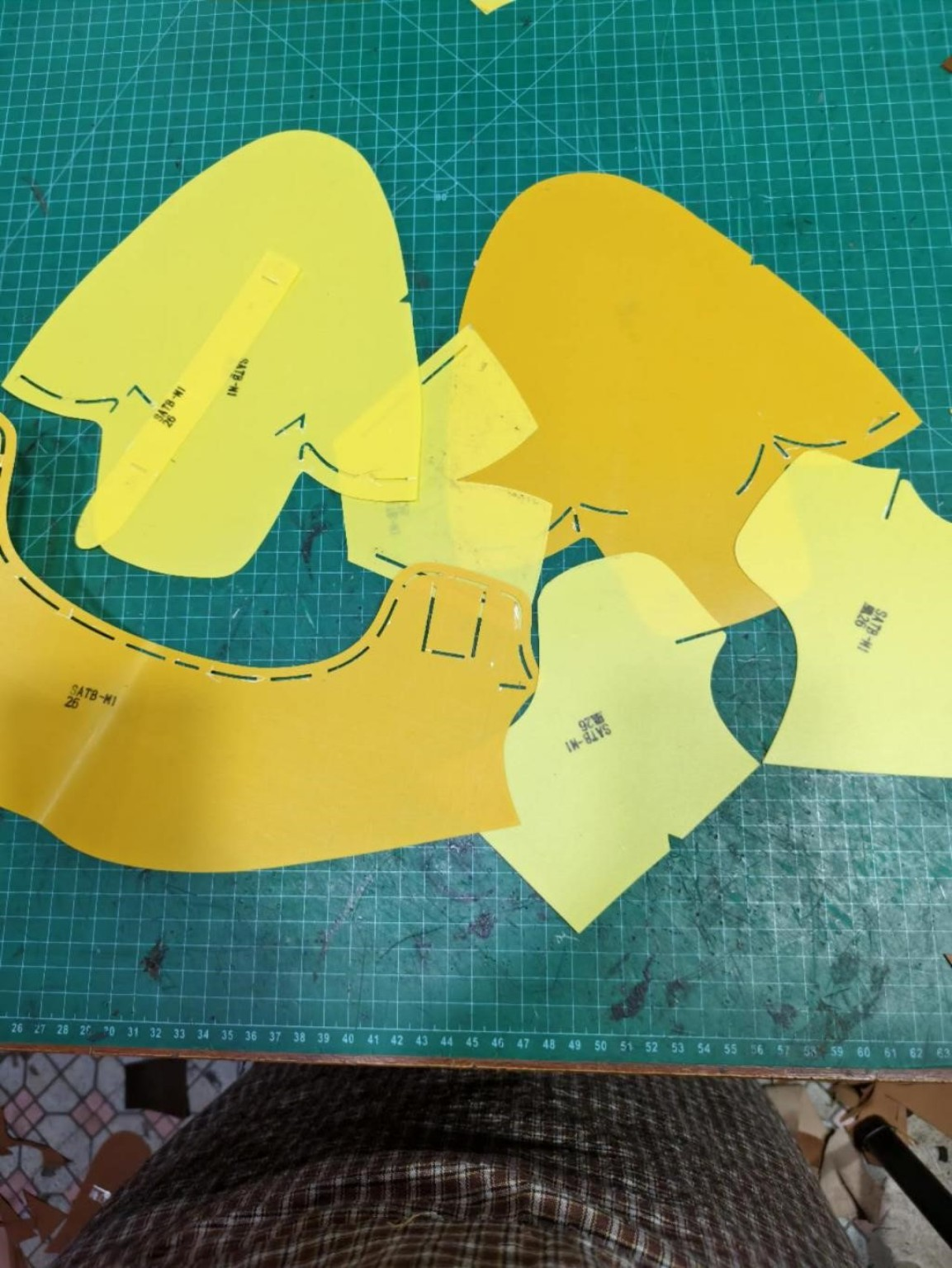
Paper pattern
The edges and notches on the paper mark where the upper pieces meet.
Cutting the upper
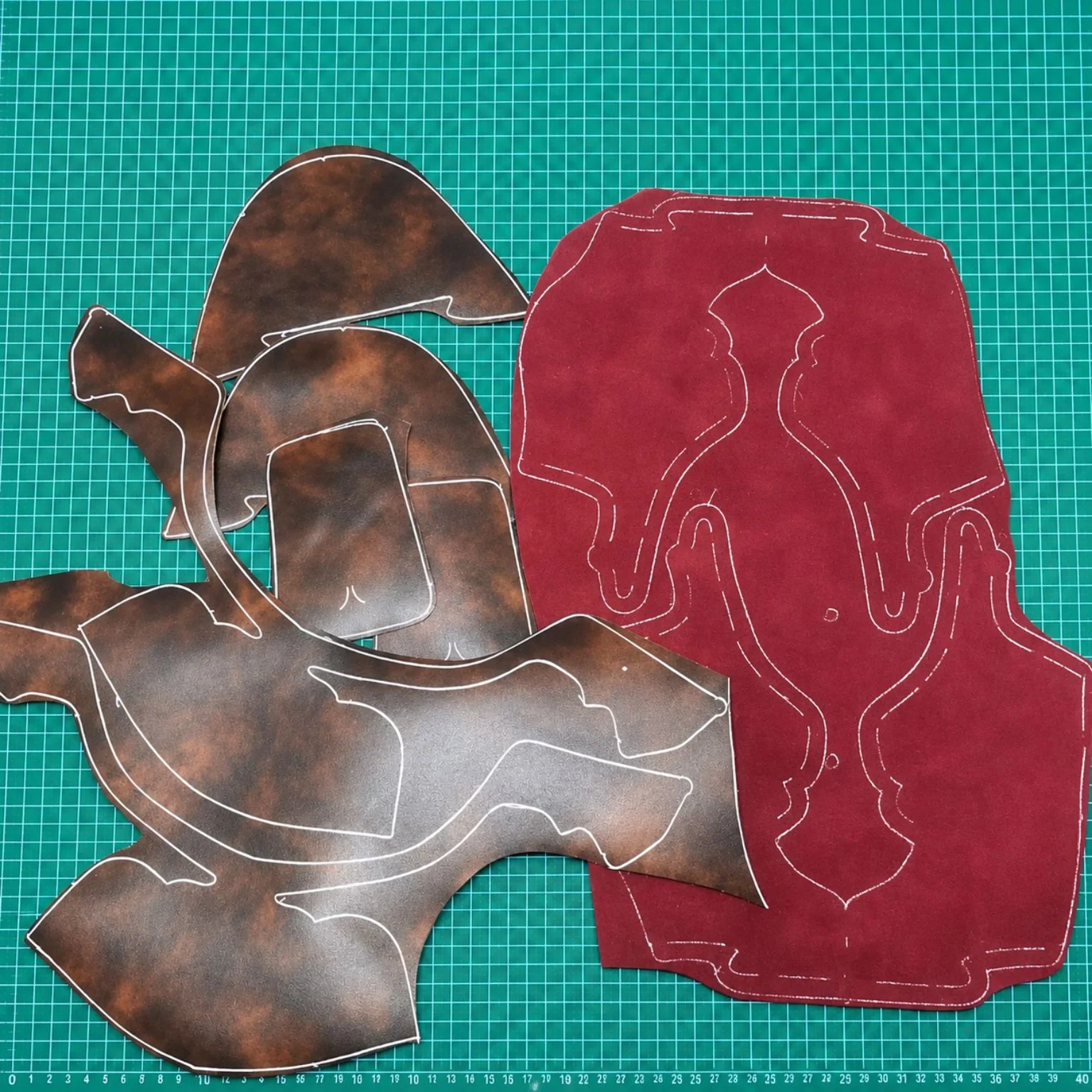
On this two-tone Oxford, pale lines mark the edges of the brown facing and the burgundy panels.
See the burgundy Oxford in the archive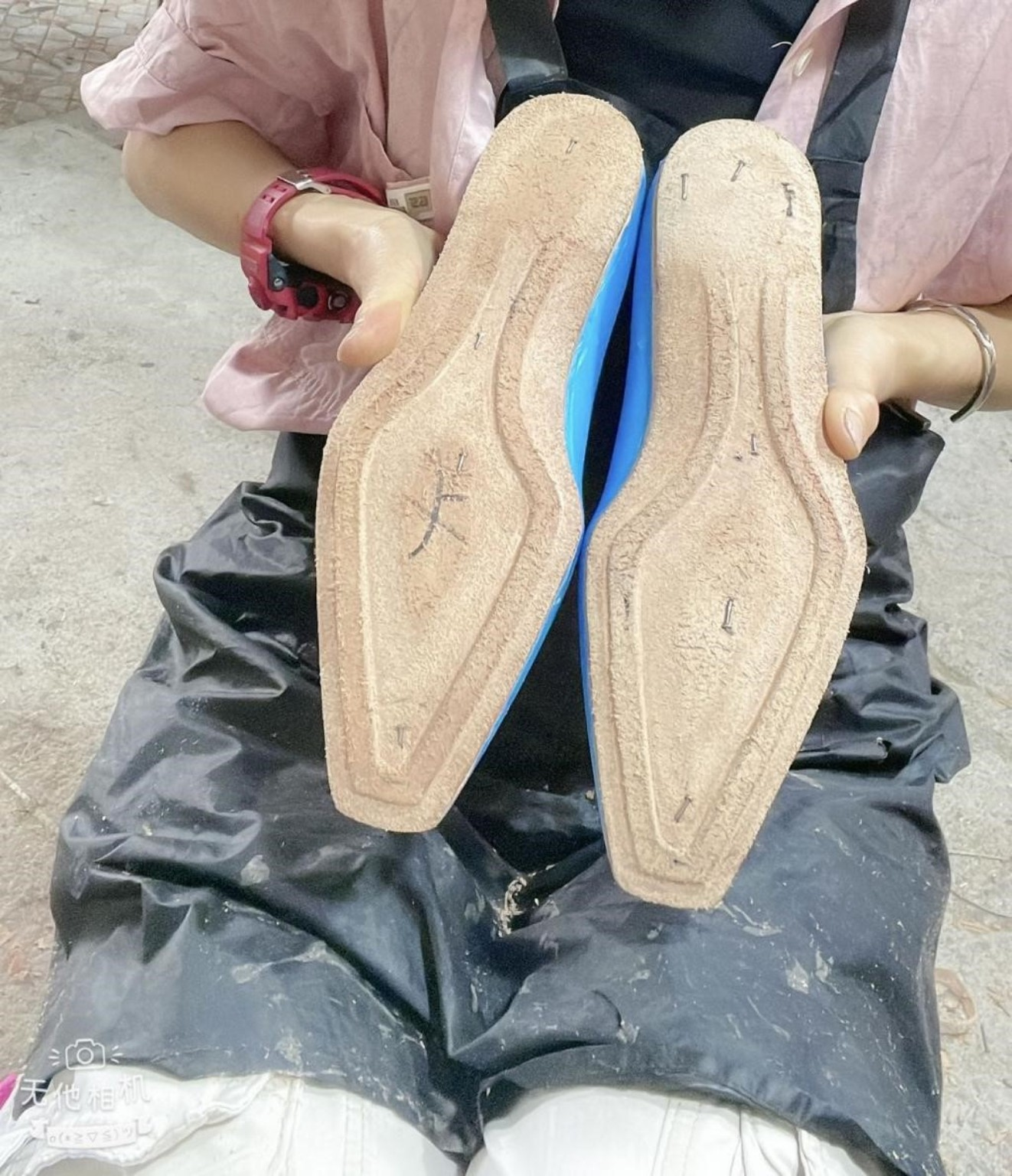
Preparing the insole
The leather insole is secured to the bottom of the last. Channels and guide marks show where the stitching will run.
Lasting
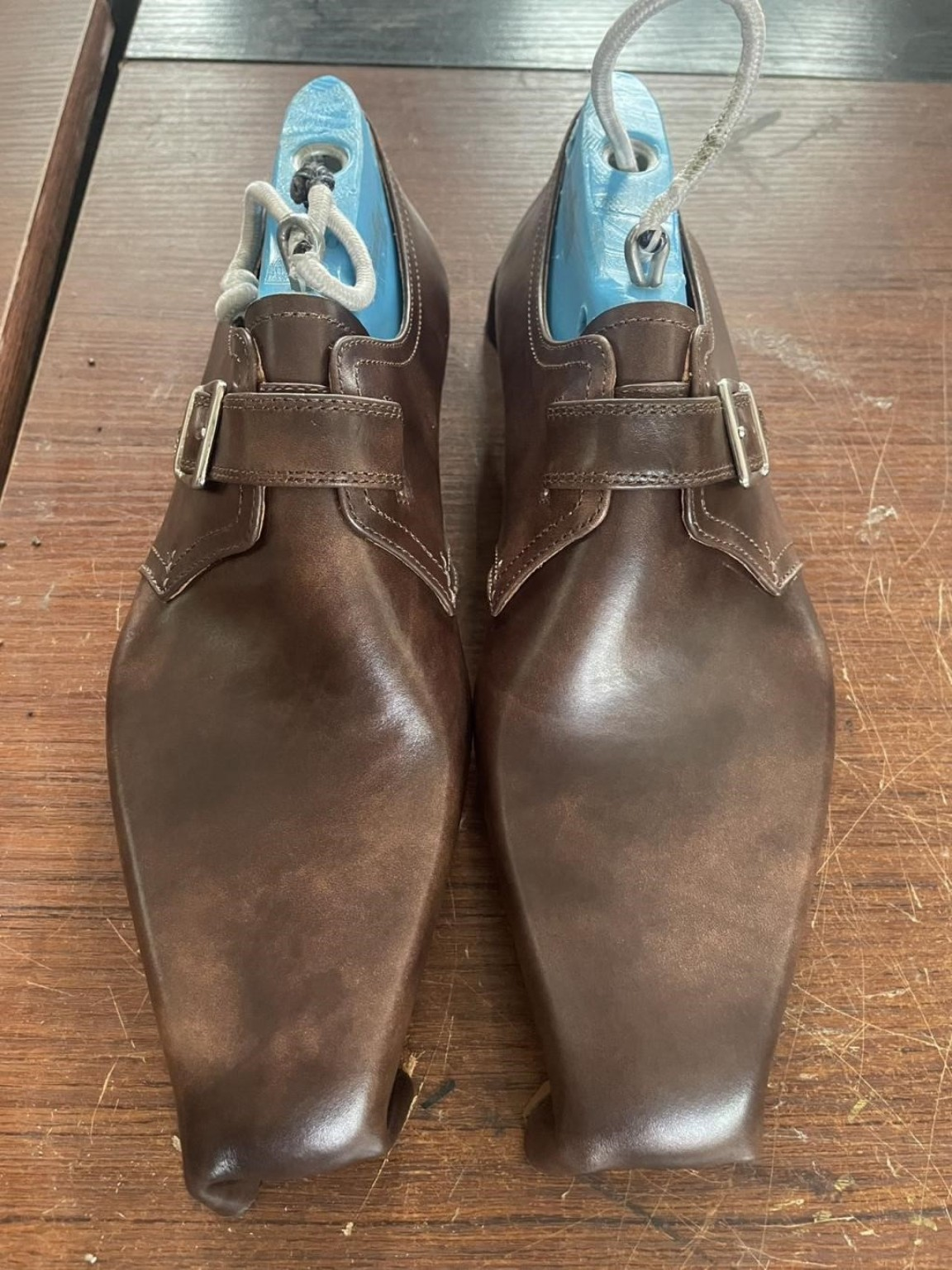
On the blue lasts, the brown uppers take on their square-toed shape.
Hand welting
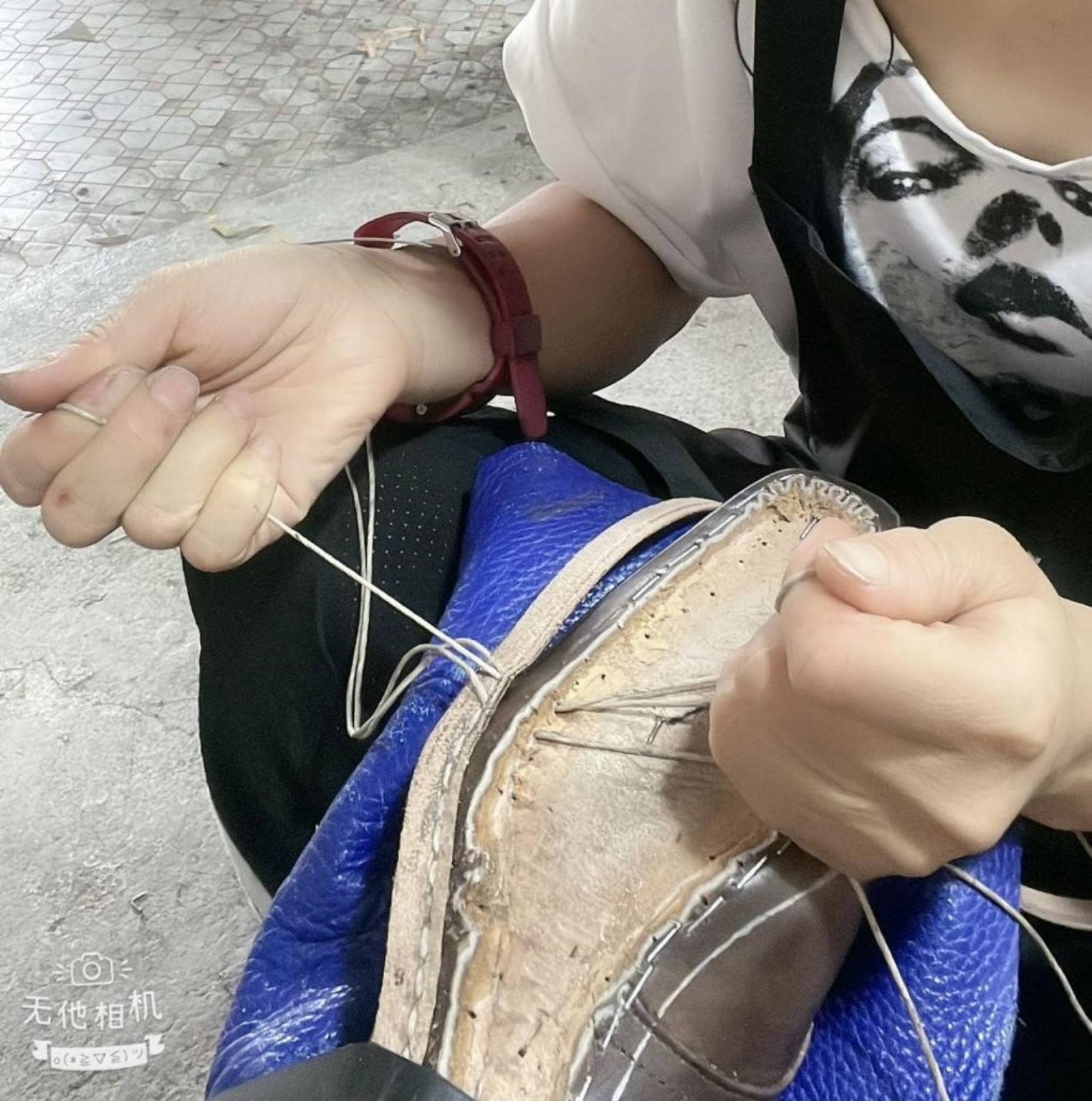
The maker draws the thread tight along the welt, one stitch at a time.
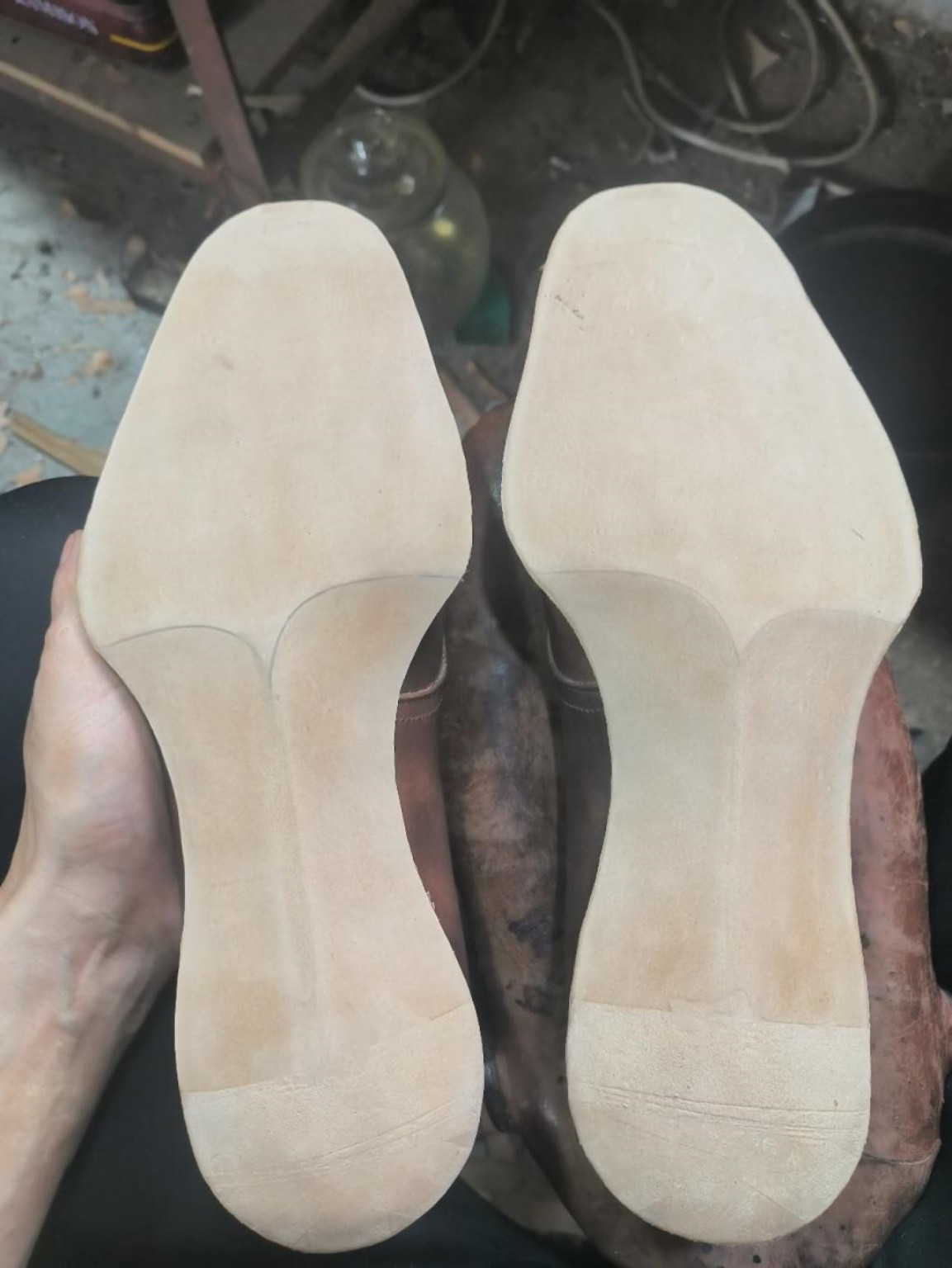
Sole finishing
Before the soles are coloured, the heel outline and guide marks are still visible on the pale leather.